Free Delivery & Return
 365-Day Returns
 10 Million Happy Customers
 500,000 Products in Stock

How to Choose the Perfect Dining Room Chair
Reviewed by the Beliani Content Team · Updated November 2026
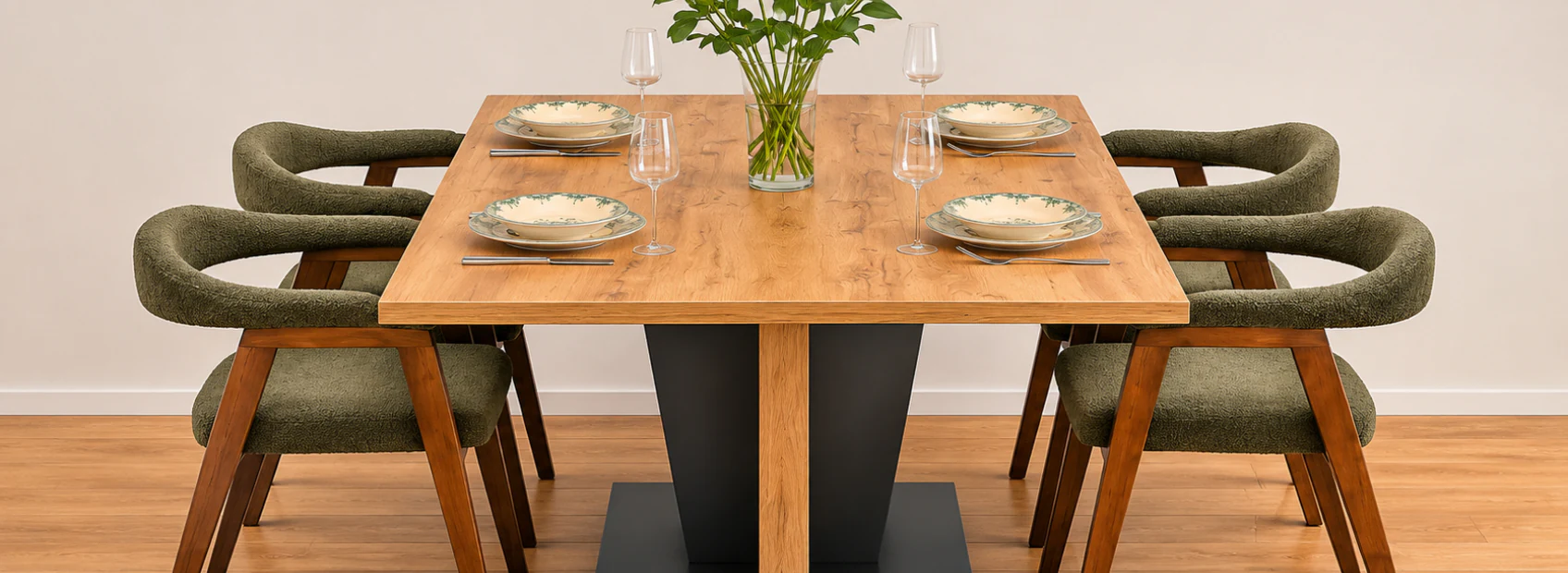
Dining chairs get used every single day, long after the excitement of choosing a table has faded. Get the fit wrong and you end up with cramped elbows, a stack that will not fit in storage, or a seat that looks right in a photo but never feels comfortable after twenty minutes. This guide works through the measurements, materials and features that decide whether a chair earns its place at your table for years, not just for the first dinner party.
In short
What matters most when choosing a dining chair?
A dining chair earns its place when it suits the table, the room and the way you actually eat. Start with the table: its length or diameter decides how many chairs fit, and a seat height of 45-50 cm leaves 25-30 cm of legroom underneath. Then think about who will be sitting, because wood, leather, fabric, metal and plastic each trade looks for upkeep in a different way. Finally, test for comfort, since a chair that feels fine for ten minutes can feel very different by dessert.
What to get right first:
- The table: its size sets the number of chairs, and at least 90 cm of space around it lets them pull out comfortably
- The material: how much daily wear, spills, children or pets it needs to handle
- The comfort: seat height, depth and width, plus a backrest and padding you will still enjoy at the end of a long meal
How many dining chairs do you need for your table?
The number of chairs a table comfortably seats depends on its length or diameter, not on how many you can squeeze around it. A rectangular table up to 160 cm seats 4 chairs, one between 160 and 200 cm seats 6, and one of 200 cm or longer seats 8. A round table seats 2 chairs up to 100 cm across, 4 chairs between 100 and 120 cm, 4 to 6 chairs between 120 and 150 cm, and 6 chairs from 150 cm upward.
What chair dimensions ensure comfortable seating?
Once you know how many chairs you need, the next step is making sure each one is the right size for your table and for the people sitting at it. Seat depth should sit between 40 and 50 cm, deep enough to sit back comfortably without feeling too far from the table. Seat height works best between 45 and 50 cm, which pairs with the standard table height of 70-75 cm and leaves 25-30 cm of legroom underneath for a relaxed meal. Seat width is the third number to check: standard chairs measure around 40-50 cm across and armchairs closer to 60 cm, so allow about 60 cm of table length per person to give everyone elbow room.
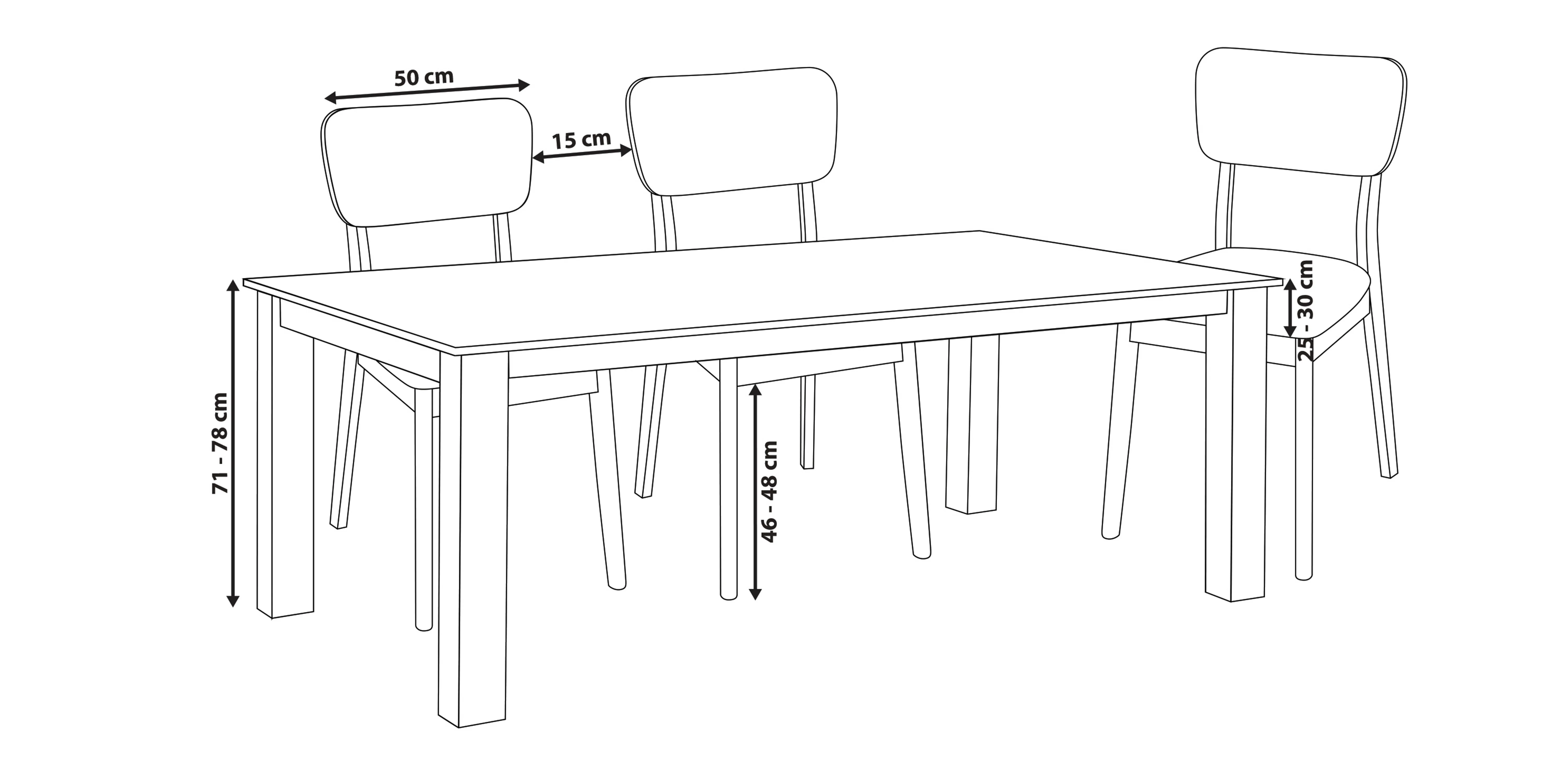
How much space do you need around the dining table?
Chairs need room to move as well as room to sit. Allow at least 90 cm between the table edge and the nearest wall or furniture, so a chair can slide back and someone can still squeeze past behind it. Around 75 cm is the bare minimum, and a sideboard behind the chairs eats into that, so add its depth to your measurement. Armchairs and bulky upholstered styles need a little extra room to pull out.
Shop now: dining chairs
Which material suits your dining chairs best?
When selecting dining chairs, the material plays a crucial role in both the aesthetic appeal and practicality of your choice.
Wooden chairs
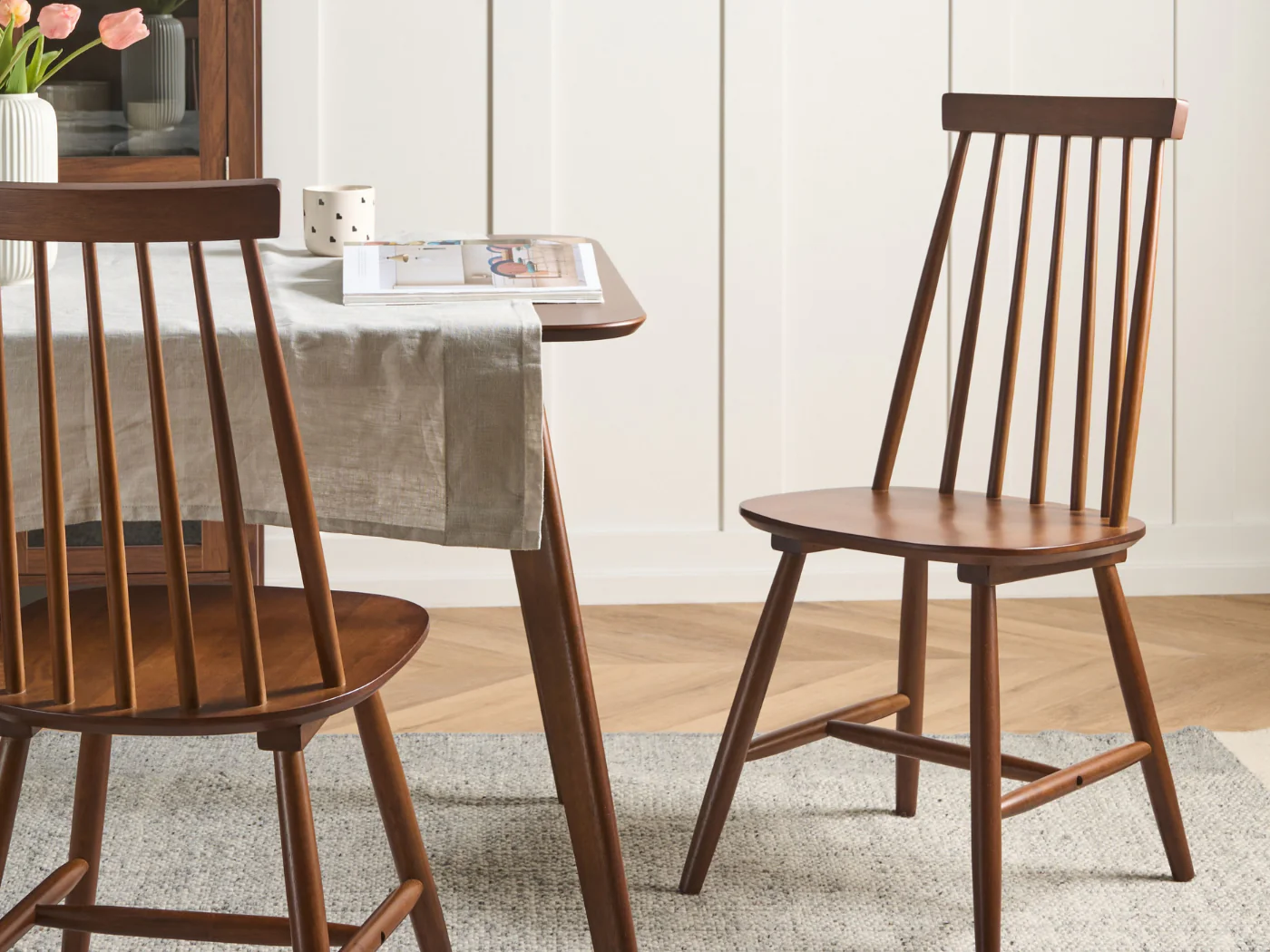
Wooden chairs introduce warmth, natural texture and timeless appeal to any interior, creating a sense of comfort and grounding. Their versatility allows them to complement a wide range of styles, from the rustic charm of farmhouse and cottage designs to the sleek, minimalist lines of Scandinavian or modern aesthetics. Wooden chairs also blend well with traditional and eclectic interiors, adding a touch of authenticity and character.
Depending on their finish, they can appear contemporary and refined, or distressed and vintage, making them a perfect fit for various décor preferences.
Pros
- Renowned for their strength and longevity
- Timeless design
- Eco-friendly
Cons
- Heavy and hard to move
- Prone to scratches and water damage
- Can be expensive
Shop now: wooden chairs
Leather chairs
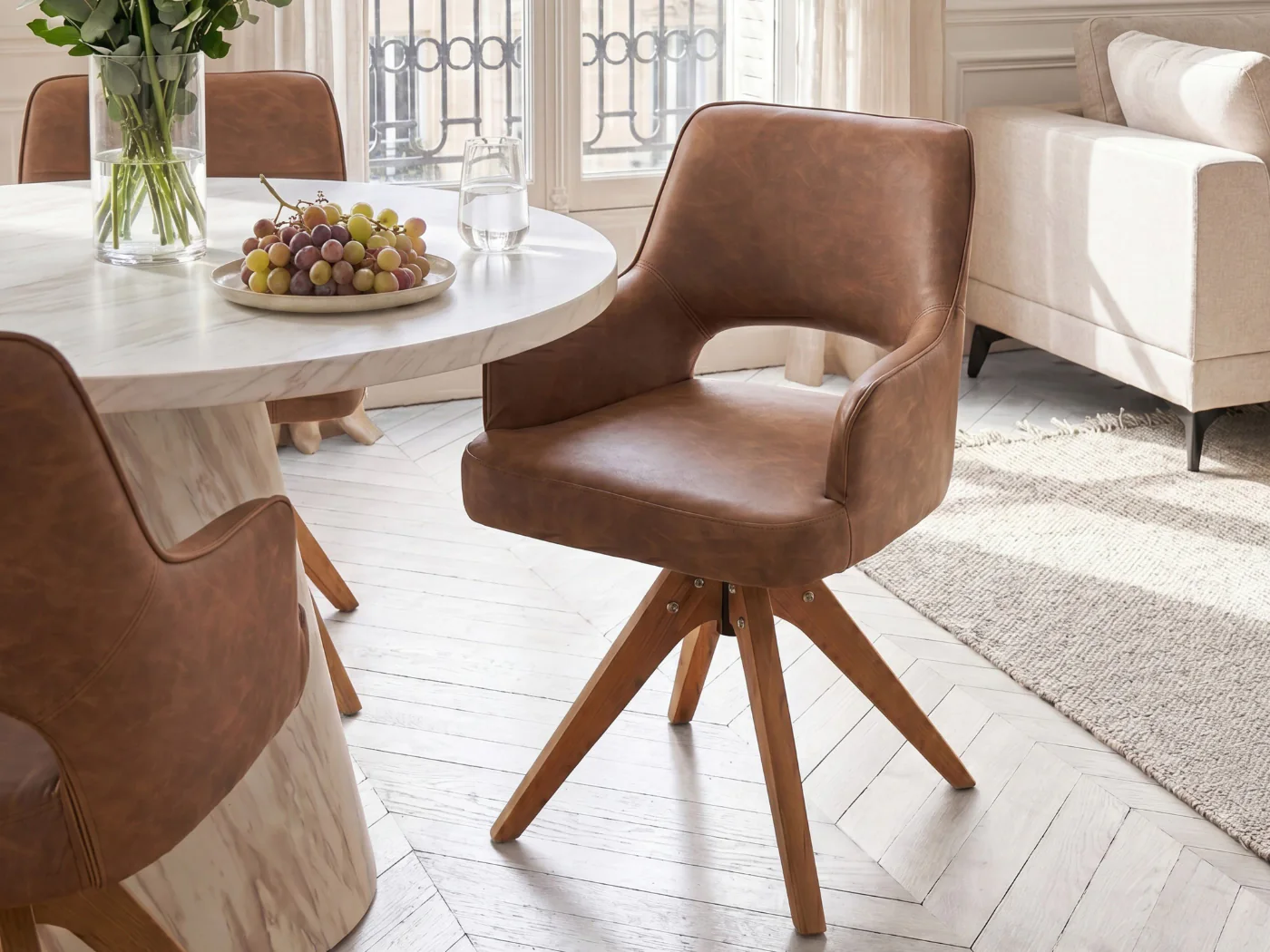
Leather dining chairs bring an air of sophistication and luxury to a dining space, offering both style and comfort. The smooth texture and rich tones of leather add warmth and depth, making them a statement piece in any room.
Leather is also durable and easy to clean, making it ideal for frequent use. These chairs work well with modern, industrial and contemporary styles, while also complementing rustic or traditional décor with their timeless appeal. Over time, leather develops a unique patina, adding character and enhancing its charm, making it a versatile choice for both formal and casual settings.
Pros
- Durable and long-lasting
- Easy to clean
- Comfortable and luxurious feel
Cons
- Expensive
- Sensitive to temperature
- Potential for fading and cracking
Shop now: leather chairs
Fabric chairs
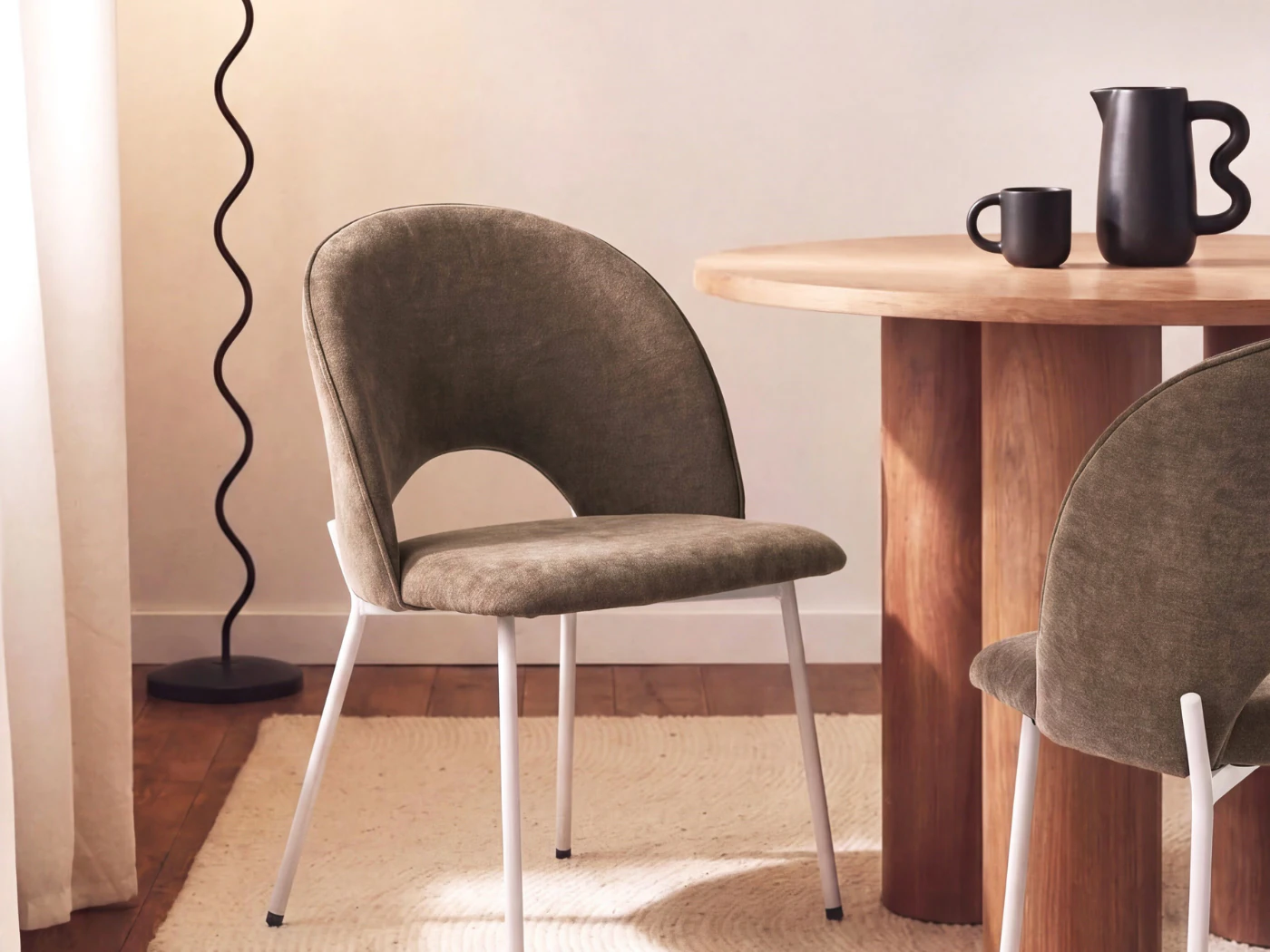
Fabric-upholstered dining chairs bring comfort and versatility to a dining space, offering a wide range of colours, patterns and textures to suit any interior style. They provide a soft, cushioned seating experience, making them ideal for long meals and gatherings. Fabric chairs can complement both casual and formal settings, from contemporary to traditional designs.
However, they require more maintenance than leather or wood, as fabric can be prone to stains and wear. Despite this, they add warmth, cosiness and a personalised touch, allowing for creative expression through various fabric choices.
Pros
- Comfortable
- Versatile in style
- Wide range of colours and patterns
Cons
- Prone to stains
- Require more maintenance
- Can wear over time
Shop now: fabric chairs
Metal chairs
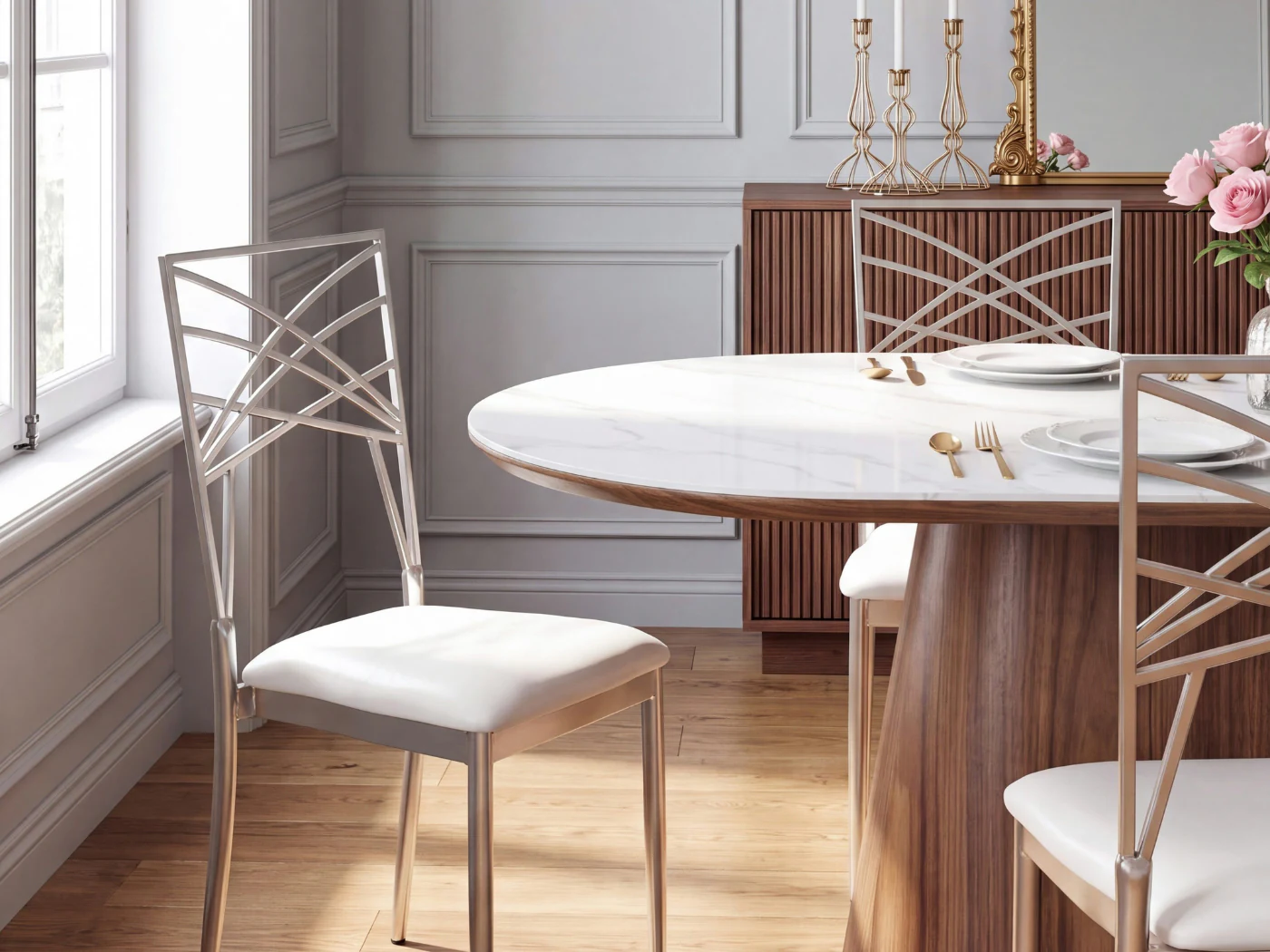
Metal dining chairs offer a sleek, modern aesthetic and are known for their strength and durability. They provide a minimalist look that works well in industrial, contemporary and eclectic interiors, adding an edgy, urban feel to the space.
Easy to clean and often stackable, they are practical for both indoor and outdoor use. Metal chairs can be paired with cushions or upholstered seats to enhance comfort and style. However, they may feel cold to the touch and can be noisy or hard on floors without protective pads. Despite these drawbacks, their durability and distinctive look make them a popular choice for both casual and chic dining areas.
Pros
- Sturdy
- Easy to clean
- Sleek, modern look
Cons
- Cold to touch
- Noisy on floors
- May need cushions for comfort
Shop now: metal chairs
Plastic chairs
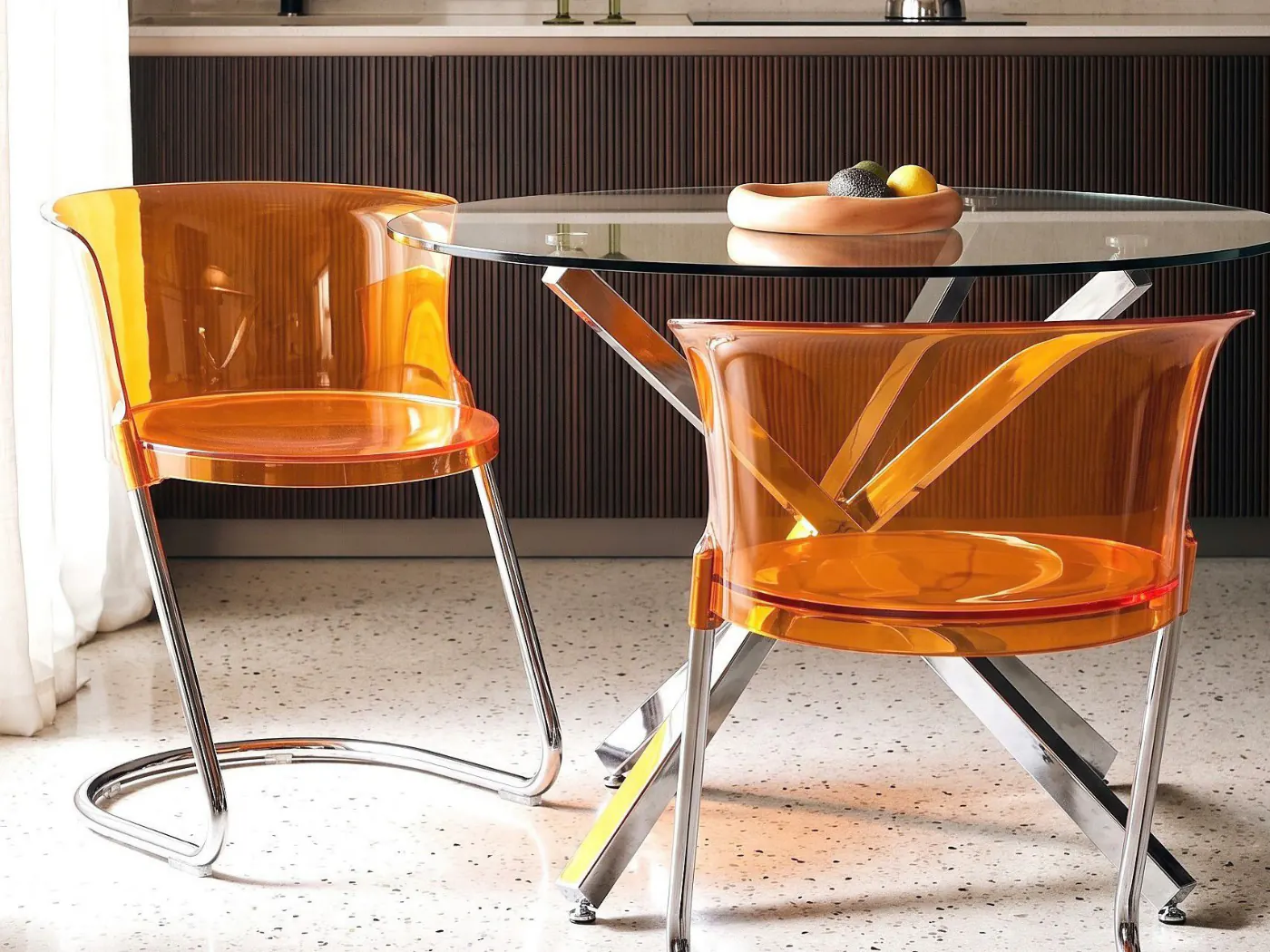
Plastic dining chairs are lightweight, affordable and versatile, making them a practical choice for a variety of settings. They come in a wide range of colours, shapes and designs, easily fitting into both contemporary and casual interiors.
Resistant to moisture and easy to clean, plastic chairs are ideal for families with children or for outdoor use. However, they may lack the durability and sturdiness of other materials like wood or metal, and can sometimes appear less refined. Despite these limitations, their affordability, flexibility and low maintenance make them a popular option for many homes.
Pros
- Lightweight
- Affordable
- Easy to maintain
Cons
- Less durable
- Can look less refined
- Not as sturdy
Shop now: plastic chairs
What makes a dining chair comfortable for long meals?
Padding is only part of it. A backrest that leans back slightly supports your spine better than a bolt-upright one, and a taller back gives you more to lean on. Look for a seat whose front edge does not press into the back of your legs, and for padding that springs back after use. Chairs that feel fine for ten minutes can start to nag after half an hour if the back is too upright, so choose for the longest meal you will actually sit through.
What extra features should you look for in a dining chair?
Beyond the five main materials, wicker and a handful of design features change how a chair fits into daily life and how well it adapts to a smaller or busier home.
Wicker
Lightweight and breathable, wicker suits a cosy, casual dining space and warmer climates.
Open-back
An open-back frame keeps the room feeling light and can add visual interest through its pattern.
Armrests
Armrests add formality and support, and suit the head of the table or longer, more relaxed meals.
Swivel
A swivel base lets you turn and move without standing, useful in a dining room that doubles as a workspace.
Folding
Folding chairs store away quickly, making it easy to set up extra seating only when you need it.
Stacking
Stacking chairs are light and easy to store away when not in use, which suits smaller or flexible spaces.
How to mix and match dining chairs?
Not every chair around the table needs to be identical. Combining different styles, colours and materials, such as pairing sleek metal chairs with warm wooden ones, can add depth and interest to the room while still looking intentional rather than mismatched.
Chairs also do not need to match the table itself. A rustic wooden table paired with modern plastic chairs, for example, can make a confident style statement, giving you the flexibility to bring in different finishes while keeping the room cohesive overall.
What to check before buying
Work through these checks in order, from table size to the finer details, before you commit to a set.
- Match your table's length or diameter to the seating numbers above
- Check seat width (40-50 cm, or around 60 cm for armchairs) and allow about 60 cm of table length per person
- Check seat depth (40-50 cm) and seat height (45-50 cm) against your table height
- Leave 25-30 cm of legroom between the seat and the underside of the tabletop
- Leave at least 90 cm between the table edge and the nearest wall or furniture
- Choose a material that fits how the room is actually used, such as with children, pets or frequent guests
- Pick a backrest and padding you will still enjoy at the end of a long dinner
- Decide whether armrests, a swivel base, or folding or stacking storage matter for your space
- If mixing styles, keep one element consistent, such as leg colour or seat height, across every chair
Frequently asked questions
Which dining chairs suit a round table best?
Armless chairs, or ones with narrow arms and a curved back, tuck in best. Seats sit at an angle around a round table, so wide arms soon bump into their neighbours. If you want full armchairs, give a round table for six a diameter of at least 150 cm.
Will standard dining chairs work with a counter-height or bar-height table?
No. Standard dining chairs are made for tables around 70-75 cm high. A counter-height surface of about 90 cm needs a seat of roughly 60-66 cm, and a bar-height surface of 100-110 cm needs a seat of about 76 cm, so look for counter or bar stools instead. Measure the surface first and match the seat height to it.
Are stacking or folding chairs sturdy enough for daily use?
Most stacking and folding chairs are built for regular use and hold up well to daily dining, though they can feel lighter underfoot than a fixed-frame chair. Check the joint construction and weight rating on the product listing if the chairs will see heavy daily use.
Do chairs with armrests fit under every dining table?
Not always. Measure the gap between the seat and the underside of the tabletop or its apron before buying armed chairs, since the armrests need to clear that gap to slide in and out comfortably.
How do I stop dining chairs from scratching my floor?
Fit felt pads to the feet of any chair that stands on wood, laminate or tile, and lift chairs rather than dragging them. Check the pads every six to twelve months: once they are worn, compressed or full of grit, they can scratch the floor instead of protecting it. Sweeping or vacuuming around the table helps too.