Free Delivery & Return
 365-Day Returns
 10 Million Happy Customers
 500,000 Products in Stock

How to arrange small spaces
Reviewed by the Beliani Content Team · Updated November 2026
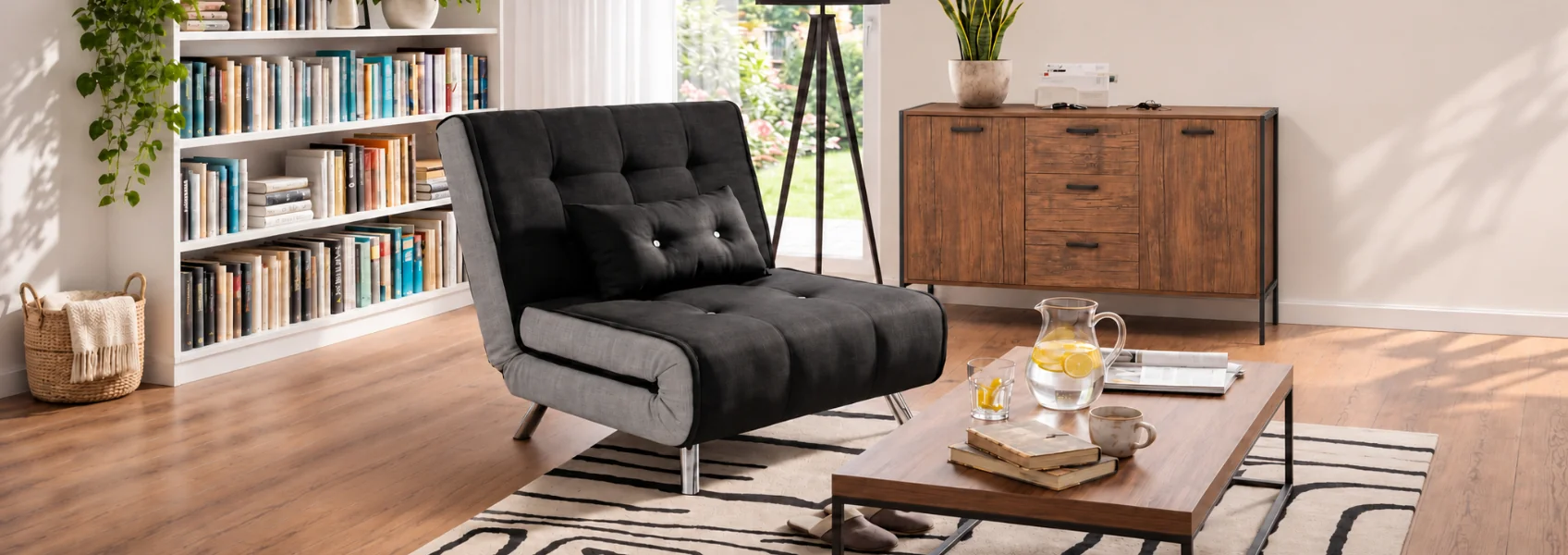
A small flat can feel either cramped or genuinely easy to live in, and the difference usually comes down to how it is organised rather than how many square metres it has. Every piece of furniture, every storage choice and every zone either supports your daily routine or gets in its way. This guide walks through the practical changes that make a small space work harder, from decluttering and smart storage to furniture choice and layout.
In short
How do you make a small space functional, not just bigger-looking?
A small space works when every piece of furniture earns its place and every zone has a clear job, even if several jobs share the same room. Keep a walkway of at least 60cm clear, choose multifunctional or modular furniture so one piece can serve two purposes, and store items by function rather than leaving them wherever they fit. Light colours and mirrors help the room feel open, but the real test of a small space is whether you can still move, store and live in it comfortably day to day.
Why does decluttering matter more in a small room?
In a small room, every object competes for visual attention, so clutter reads as smaller and messier than it would in a larger space. Follow the principle "less is more": if an item is not functional or does not belong to the overall decor, remove it from the room entirely rather than finding it a new corner.
Keeping a smooth walking path matters as much as what you remove. Aim for a minimum of 60-75cm along main routes through the room, and at least 45cm around furniture you only pass occasionally. Anything narrower makes the room feel tight regardless of how it is decorated, and makes everyday movement and cleaning harder.
A common mistake to avoid
Keeping an item "just in case" is one of the biggest space drains in a small flat. If it has not been used in the last year and has no clear function in the room, it is taking up space that could otherwise create breathing room.
How do baskets and boxes help you declutter without losing storage?
Decluttering does not mean owning less of everything you need, it means keeping what is out of sight organised rather than scattered. Baskets and boxes group small, loose items, such as cables, toys or spare bedding, into single units that stack or slide under furniture instead of spreading across surfaces. A woven basket by the sofa for throws, or a fabric box on a shelf for odds and ends, keeps the room looking deliberate even when it is doing a lot of storage work.
Choosing a consistent material or colour across your baskets and boxes also keeps a small room visually calm, since mismatched storage adds the same clutter it is meant to remove.
Read more: baskets and boxes for smart home storage solutions
How do you fit several functions into one small room?
Many small flats need one room to work as a living room, a home office and sometimes a guest room, and the furniture has to carry that weight. Rather than letting functions blend into a single cluttered zone, split the room into clear areas, even informally, so each activity has its own footprint.
- Use a rug or a change in furniture orientation to mark where one zone ends and another begins
- Keep a compact desk or fold-down table for work, rather than using the dining or coffee table and leaving papers out
- Choose a sofa bed or day bed so the seating area doubles as a guest bed without needing its own room
- Store each zone's items separately, such as work supplies in one box and throws in another, so tidying one area does not spill into the next
- Keep a single focal point, such as the sofa or the bed, so the room still reads as one coherent space rather than several competing for it
Read more: space-saving furniture solutions for cosy living rooms
Which furniture works best in a small flat?
Multifunctional and modular furniture is the single most effective category for small spaces, because each piece does the work of two. A sofa bed or a day bed gives a living room an extra sleeping surface without needing a separate guest room, and a coffee table with built-in storage removes the need for a separate cabinet nearby.
Sleeps extra guests
Sofa beds and day beds
Convert a living room into a guest room in minutes without dedicating a separate space to it full time.
Hides everyday clutter
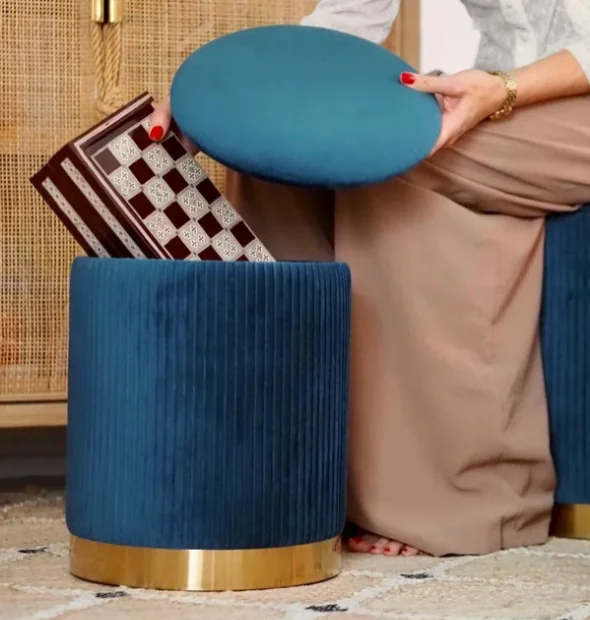
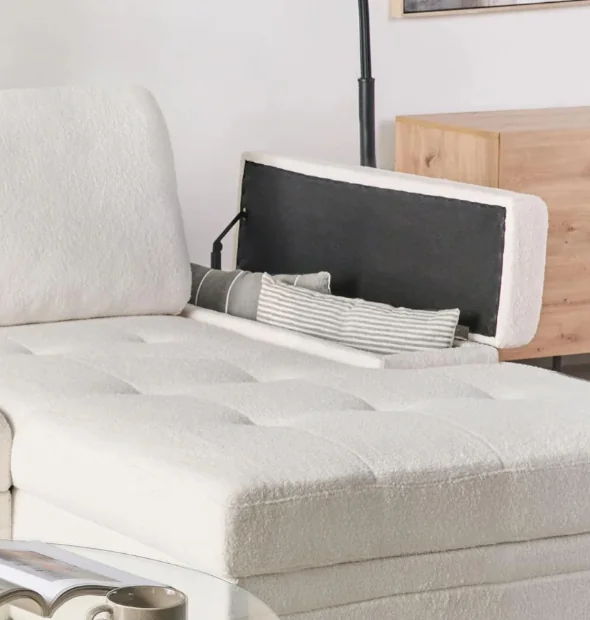
Storage coffee tables and ottomans
Store blankets, remotes and magazines out of sight, freeing up the surfaces around them.
Grows when you need it
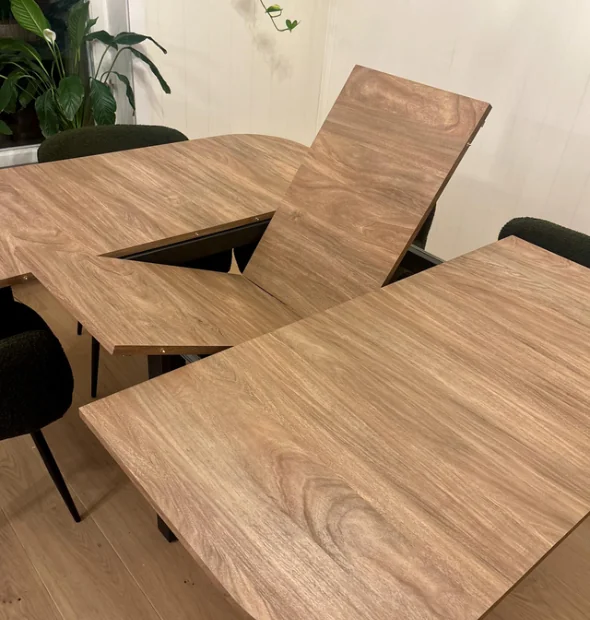
Extending tables
Stay compact for everyday meals, then extend to seat guests, so you only use the extra space on the days you need it.
Shop now: sofa beds, storage ottomans and extending tables
Like this look? Shop it
How should you position furniture in a small room?
Where you place each piece changes how large the room feels just as much as what you choose. Push larger pieces against the walls to keep the centre of the room open, and choose furniture with slim, visible legs rather than a solid base that touches the floor along its whole length. A sofa that visibly "floats" on slender legs reads as lighter than one that looks like it is sitting directly on the floor.
Modular pieces are worth prioritising here too, since they let you reshape the layout whenever the room's use changes, rather than being stuck with furniture that only works one way.
Why does vertical storage help when floor space is limited?
When floor space runs out, the wall above it usually has not. Wall-mounted shelves keep books and decor off the floor and out of the walking path, while a tall, narrow bookcase draws the eye upward and makes the ceiling feel higher than it is. This vertical pull is one of the simplest ways to add storage without sacrificing circulation space.
Shop now: bookcases & shelving units
Which colours make a small room look bigger?
Light colours such as white, cream and soft pastels reflect natural light rather than absorbing it, which keeps a small room from feeling closed in. Applied to walls, large furniture and curtains, these tones bounce light around the space and reduce the shadows that make a room read as smaller than it is.
A room painted entirely in light colours can still feel flat, so add depth through accents a shade or two darker than the main scheme, such as cushions, a throw or a piece of artwork. This layering adds visual interest without crowding the space the way a bold feature wall would.
How much difference does a mirror actually make?
A mirror placed on the wall opposite a window reflects daylight back into the room, which brightens the space and creates the impression of an additional window or doorway. Beyond brightening the room, mirror placement can highlight architectural details or reflect artwork, adding a second layer of visual interest without adding another object to navigate around.
A single large mirror on a focal wall tends to work better than several smaller ones, since it reads as a deliberate design choice rather than a patchwork. Mirrored furniture, such as a dresser or a coffee table, extends the same effect to the room's functional pieces.
Shop now: wall mirrors and mirrored cabinets
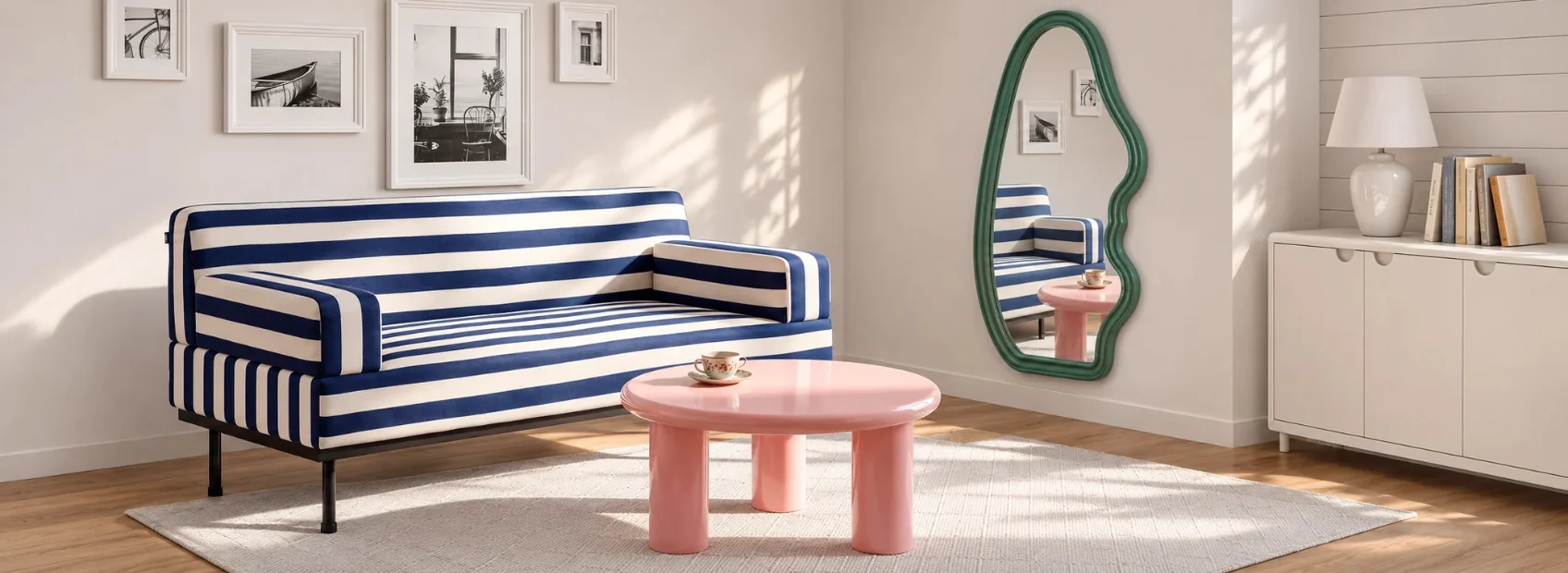
Want to recreate this style? Get the pieces
What to check before buying furniture for a small space
Run through these checks before adding anything new to a small room, so each piece earns its place rather than crowding the layout you have just planned.
- Use a rug or a change in furniture orientation to mark where one zone ends and another begins
- Keep a compact desk or fold-down table for work, rather than using the dining or coffee table and leaving papers out
- Choose a sofa bed or day bed so the seating area doubles as a guest bed without needing its own room
- Store each zone's items separately, so tidying one area does not spill into the next
- Keep a single focal point, such as the sofa or the bed, so the room still reads as one coherent space rather than several competing for it
Frequently asked questions
How much walking space should I leave between furniture?
Leave at least 60-75cm for a main walkway through a room, and a minimum of 45cm around furniture you need to squeeze past occasionally. Anything narrower starts to feel cramped and makes the room harder to clean and move through.
Should a small room have one large rug or several small ones?
One larger rug reads as more spacious than several small ones, because it creates a single unbroken zone rather than chopping the floor into pieces. As a rule of thumb, at least the front legs of your main seating should sit on the rug.
Is it better to use a few large pieces of furniture or many small ones?
A few correctly scaled pieces almost always work better than many small ones. Lots of small furniture creates visual clutter and more edges for the eye to catch on, while one well-chosen larger piece, such as a single sofa instead of two armchairs, simplifies the room.
Does curtain placement affect how big a room feels?
Yes. Hanging curtains close to the ceiling rather than just above the window frame, and letting them extend slightly beyond the window's width, draws the eye upward and sideways, which makes the wall and the room read as larger.